
Comparing Circular and Sinusoidal Motion
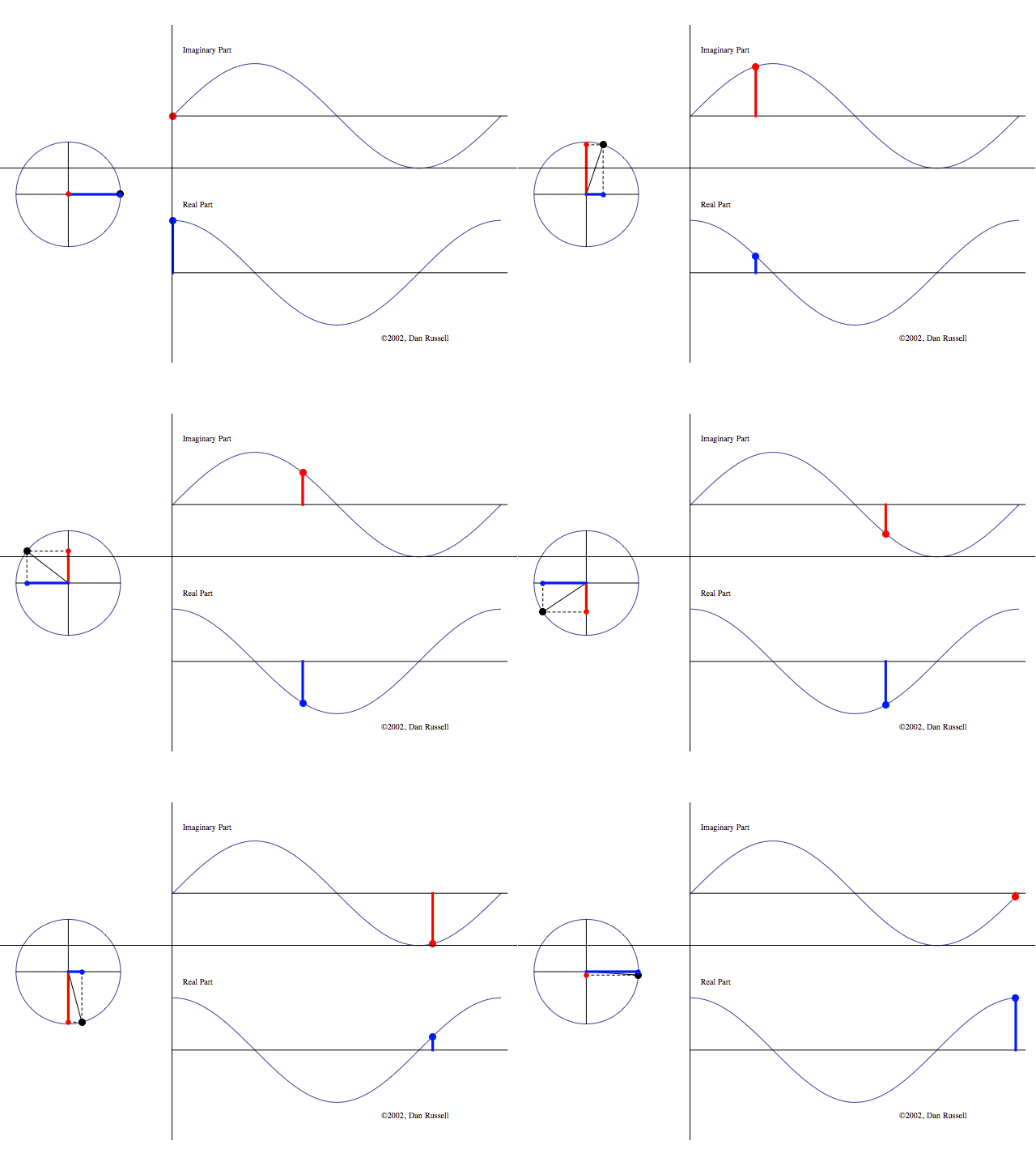
I created the animation because I wanted to show how circular motion in the complex plane is related to the sine and cosine functions used to describe simple harmonic motion. As a point rotates counterclockwise around a circular path in the complex plane the real component (the projection onto the horizontal axes, indicated in blue) oscillates back and forth along the real (horizontal) axis as a cosine function. Meanwhile, the height of the imaginary component (red line corresponding to the projection of the circular motion onto the vertical axis) oscillates up and down as a sine function.
For a much more complete explanation of the unit circle, and how they relate to sine, cosine, and tangent functions, check out this page by my current PhD student:
- Unit Circle, Sine, Cosine, and Tangent by Noah Parker (9 April, 2024)