
Longitudinal and Transverse Wave Motion
Mechanical Waves are waves which propagate through a material medium (solid, liquid, or gas) at a wave speed which depends on the elastic and inertial properties of that medium. There are two basic types of wave motion for mechanical waves: longitudinal waves and transverse waves. The animations below demonstrate both types of wave and illustrate the difference between the motion of the wave and the motion of the particles in the medium through which the wave is travelling.
Longitudinal Waves
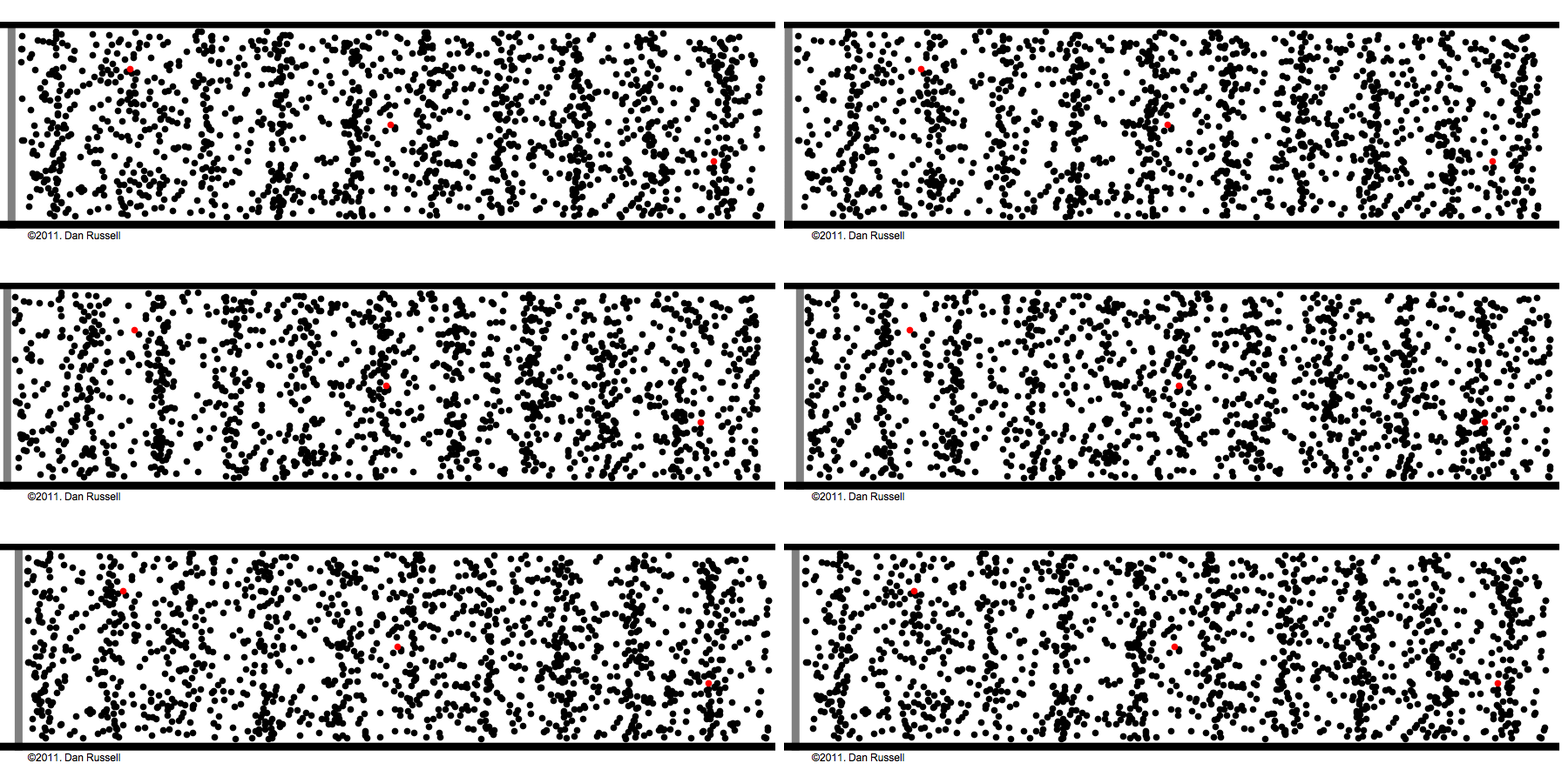
In a longitudinal wave the particle displacement is parallel to the direction of wave propagation. The animation at right shows a one-dimensional longitudinal plane wave propagating down a tube. The particles do not move down the tube with the wave; they simply oscillate back and forth about their individual equilibrium positions. Pick a single particle and watch its motion. The wave is seen as the motion of the compressed region (ie, it is a pressure wave), which moves from left to right.
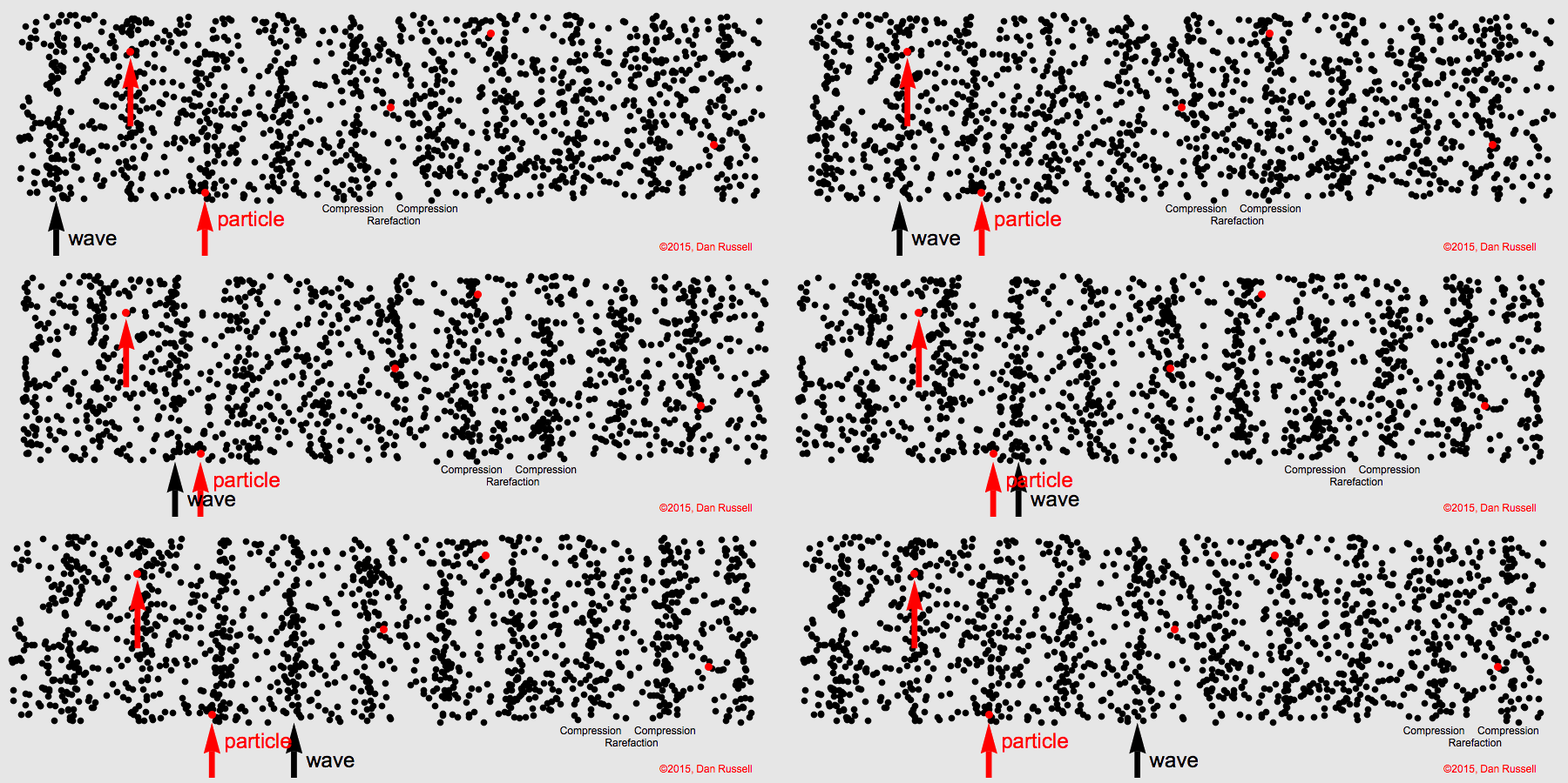
The second animation at right shows the difference between the oscillatory motion of individual particles and the propagation of the wave through the medium. The animation also identifies the regions of compression and rarefaction.
The P waves (Primary waves) in an earthquake are examples of Longitudinal waves. The P waves travel with the fastest velocity and are the first to arrive.
To see a animations of spherical longitudinal waves check out:
Transverse Waves
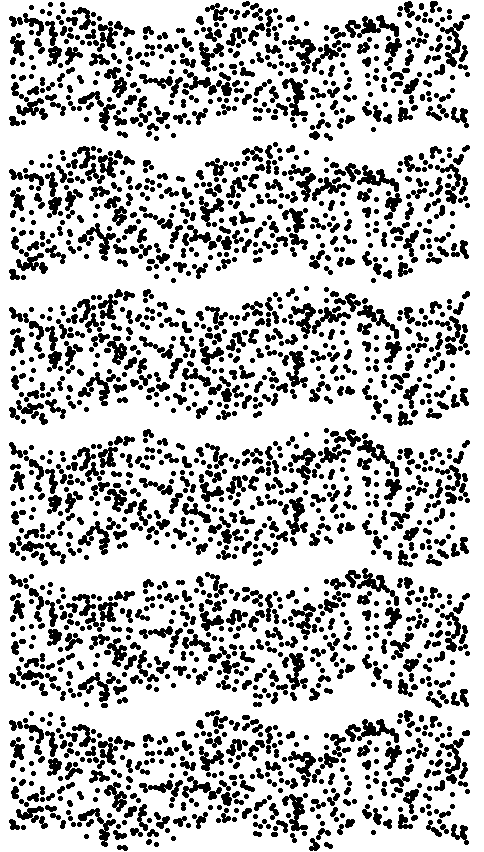
In a transverse wave the particle displacement is perpendicular to the direction of wave propagation. The animation below shows a one-dimensional transverse plane wave propagating from left to right. The particles do not move along with the wave; they simply oscillate up and down about their individual equilibrium positions as the wave passes by. Pick a single particle and watch its motion.
The S waves (Secondary waves) in an earthquake are examples of Transverse waves. S waves propagate with a velocity slower than P waves, arriving several seconds later.
Water Waves (updated 2016)
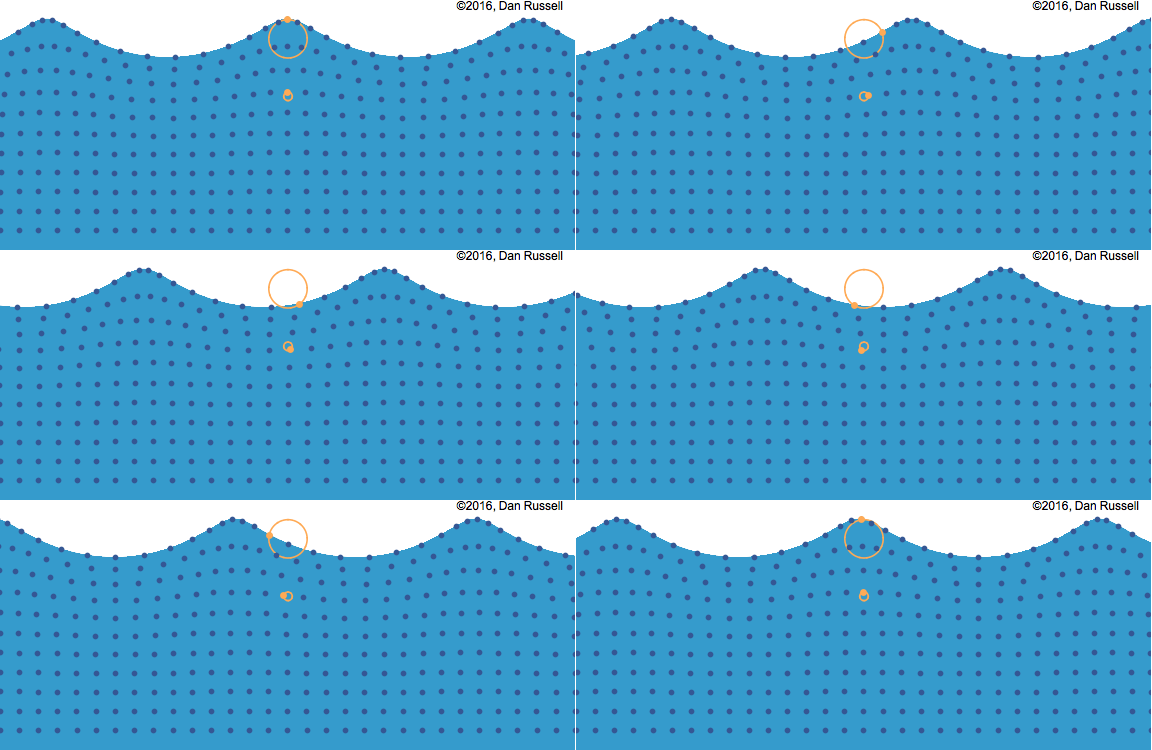
Water waves are an example of waves that involve a combination of both longitudinal and transverse motions. As a wave travels through the waver, the particles travel in clockwise circles. The radius of the circles decreases as the depth into the water increases. The animation at right shows a water wave travelling from left to right in a region where the depth of the water is greater than the wavelength of the waves. I have identified two particles in orange to show that each particle indeed travels in a clockwise circle as the wave passes.
Rayleigh surface waves (Updated 2016)
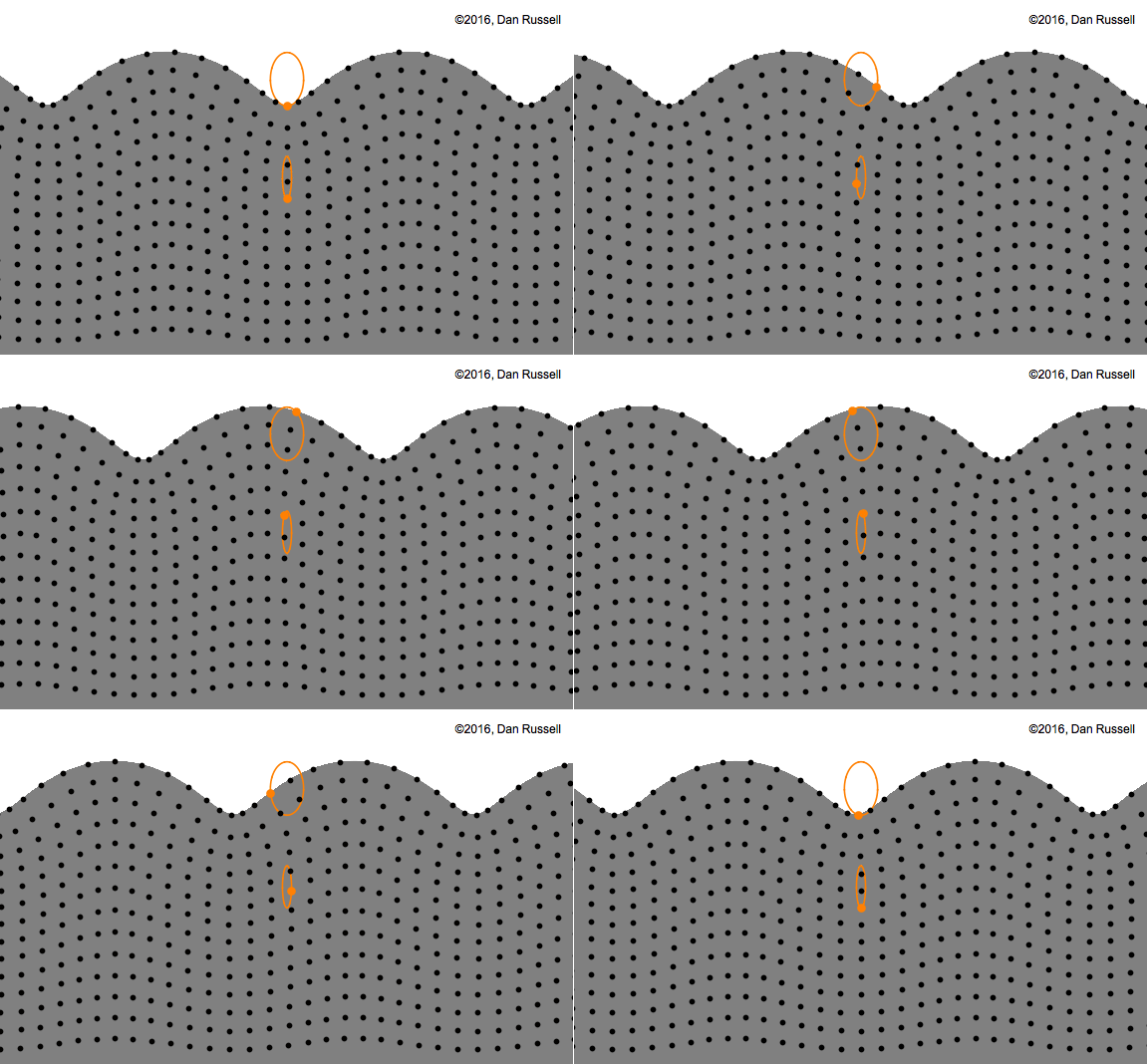
Another example of waves with both longitudinal and transverse motion may be found in solids as Rayleigh surface waves (named after John W. Strutt, 3rd Baron Rayleigh who first studied them in 1885). The particles in a solid, through which a Rayleigh surface wave passes, move in elliptical paths, with the major axis of the ellipse perpendicular to the surface of the solid. As the depth into the solid increases the "width" of the elliptical path decreases.
Rayleigh waves in an elastic solid are different from surface waves in water in a very important way. In a water wave all particles travel in clockwise circles. However, in a Rayleigh surface wave, particles at the surface trace out a counter-clockwise ellipse, while particles at a depth of more than 1/5th of a wavelength trace out clockwise ellispes. This motion is often referred to as being "retrograde" since at the surface, the horizontal component of the particle motion is in the opposite direction as the wave propagation direction. I have identified two particles in orange in this animation to illustrate the retrograde elliptical path at the surface and the reversal in the direction of motion as a function of depth.
The Rayleigh surface waves are the waves that cause the most damage during an earthquake. They travel with velocities slower than S waves, and arrive later, but with much greater amplitudes. These are also the waves that are most easily felt during an earthquake and involve both up-down and side-to-side motion.
Update (Aug. 5, 2016): Thanks to Dongyao Li (a graduate student at the University of Illinois, Urbana-Champaign in 2016) who asked questions resulting in a much improved version of this animation.